Sunday, March 31, 2013
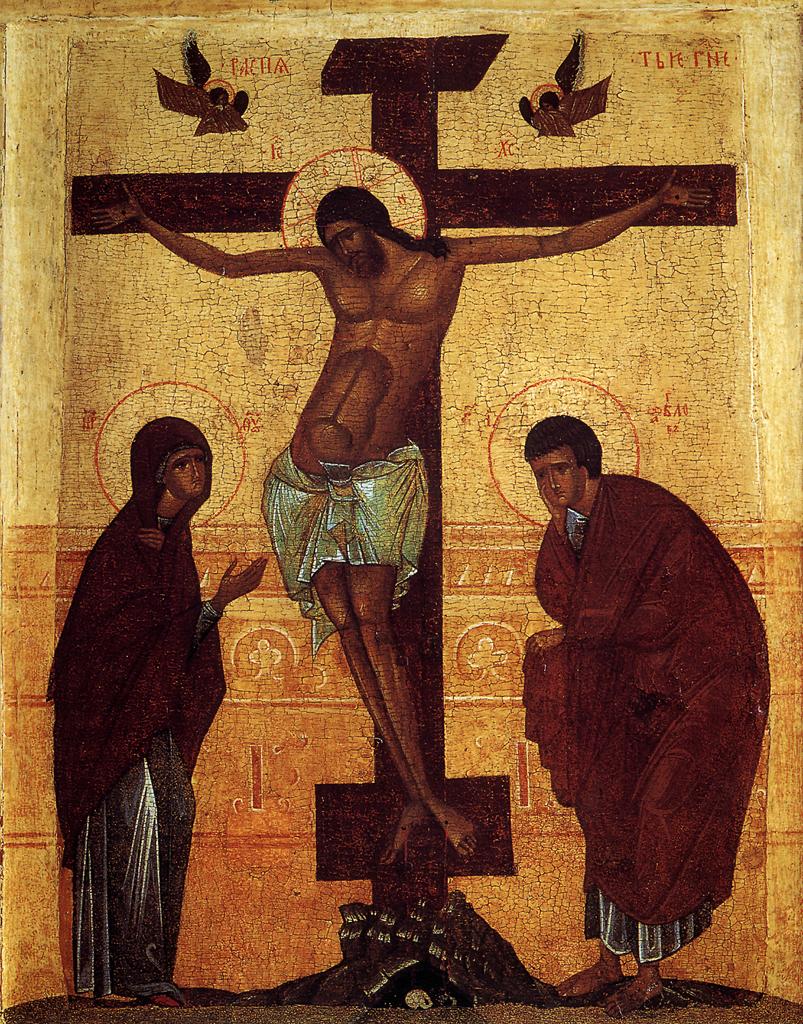
Good Friday, 2013
This year, the theme of our Sunday evening Lenten series was forgiveness and reconciliation. During the course of the series, we watched three movies and read one book. The book was Free of Charge, by Miroslav Volf, a professor at Yale Divinity School who was born in Croatia. And one of the movies was the French language film The Widow of Saint Pierre. So, by way of a Good Friday sermon, I want to offer some reflections on both the movie and the book.
The film is set on the island of Saint Pierre, a French territorial possession located just off the coast of Newfoundland. The year is 1850, during the short-lived Second French Republic. The movie begins with a senseless drunken murder committed one night by a drunken fisherman, Neel Auguste.
After his arrest, Neel is sentenced to death. Since there is no guillotine on the island, however, the island authorities must send to France for one before the execution can be carried out. And it will take months and months for a guillotine to be shipped to Saint-Pierre.
In the meantime, Neel is delivered into the custody of the local army captain. Skeptical that the guillotine will ever arrive, his wife takes an interest in rehabilitating the convict. She soon has Neel doing odd jobs all over the island – fixing roofs and such – so that he becomes popular, well-loved, and apparently forgiven. It also turns out that Neel has several children by one of the women on the island, and the captain’s wife arranges for the local priest to solemnize their marriage.
Meanwhile, the island authorities grow increasingly nervous, knowing that Neel’s new-found popularity could cause them problems when the guillotine finally arrives. But the law must be upheld. They try alternatively bullying and cajoling the Captain to restrain his wife’s activities on behalf of Neel. But the Captain, deeply devoted to his wife, refuses to rein her in and insists that the prisoner is his responsibility, not theirs.
In one revealing scene, the captain’s wife explains to Neel the philosophy of what she’s doing. He was drunk when he committed the murder, but since he no longer drinks, he’s changed. People can change, so they ought to be given second chances. Yet the expression on Neel’s face betrays skepticism of such a simplistic and facile explanation.
When a guillotine finally arrives from Martinique, it becomes clear that even though the islanders have forgiven him, Neel has not forgiven himself. Deep down, he believes that he must pay the penalty of his crime. He refuses to take advantage of an opportunity to escape to Newfoundland; and when the islanders initially refuse to unload the ship’s cargo, Neel himself enlists for the work because the money he earns will go to support his wife and children once he’s dead.
Meanwhile, on account of his defiance of the island authorities, the Captain is sent back to France where he’s court-martialed and executed by firing squad for mutiny. And on Saint-Pierre, Neel is finally executed as well.
It’s a disturbing movie, devoid of any explicitly religious message. But if I read it correctly, the deaths of both Neel Auguste and the Captain have a dimension of redemptive self-sacrifice. Rather than escape, Neel Auguste chooses to accept the death penalty to expiate the guilt of his crime, and in the process he’s able to bequeath a small inheritance to his survivors. Similarly, the Captain loves his wife so much that he accepts death willingly to pay the price of her transgression and testing the limits of what was acceptable to the island’s authorities and their sense of the demands of outraged justice.
As I watched the movie and reflected on it afterwards, I couldn’t help wishing that someone had told Neel Auguste that he didn’t have to die to expiate the guilt of his crimes, because Christ had already done that for him on the cross. He was already forgiven by God on account of the death of Christ. His faith in that assurance might not have altered the outcome of the story – the wheels of temporal justice would likely have turned inexorably anyway. But then he could at least have faced his death in the confidence that his sins were forgiven, his guilt taken away.
At some level, Neel understood what the Captain’s wife did not: that true forgiveness is always costly. In the book Free of Charge, Miroslav Volf makes it clear that to forgive is not to excuse or overlook wrongdoing. If I forgive you for some injury you’ve caused me, I am simultaneously condemning what you’ve done as wrong, and also saying that I’m not going to hold it against you. And that kind of forgiveness is costly, because it requires me to bear the injury, to absorb the offense, and to let go of the natural desire for compensation or retribution.
Yet Volf is also clear that as Christians we’re called to forgive others their trespasses because God has forgiven ours. When someone injures or offends us, we cannot withhold our forgiveness once we learn to see that person as a sinner for whom Christ died, someone who stands forgiven by God in Christ. And just as forgiveness is costly to us, so it’s costly to God, for it entails the sacrifice of the cross.
Volf does a good job of making clear that Christ’s death on the cross is not the unjust punishment of an innocent victim to make satisfaction for human sin. Rather, because Jesus Christ is the Incarnate Second Person of the Holy Trinity, by dying on the cross God himself bears the burden of our sins and absorbs our offenses. Volf writes: “the one who was offended bears the burden of the offense” (p. 145).
And yet, because Christ is not only truly God but also truly human, his death pays the price of human sin. In his First Letter to the Corinthians, Saint Paul writes: “One has died for all; therefore all have died.” Volf expands on this idea: “Now we see that we were also in Christ. What happened to him happened to us. When he was condemned, we were condemned. When he died, we died” (p. 147). The upshot is that our sinful natures have been crucified with Christ; we’re separated from the guilt of our sins; and we’re set free from the power of sin itself.
Such is the power of the cross in the life of the Christian. It’s the sign of the forgiveness of our sins in virtue of Christ’s sacrifice on our behalf. So, unlike Neel Auguste in The Widow of Saint-Pierre, we don’t need to die to expiate the guilt of our sins, because we’ve already died in Christ. And insofar as we accept God’s forgiveness, we can rest assured that Christ has taken away our guilt. We’re set free to live in the power of Christ’s resurrection, to live in Christ and to have the risen Christ live in us as the source of our life. But that is to get ahead of the story, which we’ll pick up again tomorrow evening and on Sunday morning.
Maundy Thursday, 2013
Thursday 28 March 2013
Peter said to him, “You shall never wash my feet.” Jesus answered him, “If I do not wash you, you have no part in me.”
In the thirteen years I’ve been at S. Stephen’s, the foot-washing has never been a problem. Every year we invite twelve parishioners to come forward as representatives of the congregation to have their feet washed by the clergy; and we never seem to have any problem finding volunteers to fulfill that role.
This has not been the case in most of the other parishes that I’ve known. Before I came to S. Stephen’s, in the other parishes I served, just about every year someone who was asked to have their feet washed at the Maundy Thursday liturgy refused point blank: sometimes sheepishly, sometimes defiantly, sometimes apologetically – but always implicitly taking the stand of Peter, “You shall never wash my feet.”
The ceremony of the foot washing, the Mandatum or Maundy, dates from the Middle Ages. In obedience to our Lord’s new commandment to love one another as he has loved us, on Maundy Thursday Popes would wash the feet of servants, abbots the feet of monks, and kings and queens the feet of peasants.
Yet in many places it remains a controversial practice. Some years ago the Episcopal news magazine, The Living Church, printed an opinion piece by a priest arguing that we ought not to do the foot washing at all because it distracts our attention from the primary focus of Maundy Thursday, our Lord’s institution of the Holy Eucharist.
The foot-washing plays out differently in different parishes. When I lived in Texas, an old lady in the church I attended loudly told everyone that if they ever did the foot washing there she’d leave the parish. And since she was one of the principal contributors, her threat deterred the rector from introducing the practice, for several years at least.
On the other hand, this past week I heard of a parish where all the members of the congregation – about a hundred and fifty people – have their feet washed, a process lasting about an hour and a half. And just today, I heard of a parish where the ones who get their feet washed are the twelve members of the vestry, some of whom consciously or unconsciously project the smug attitude that now they’ve got the rector where they really want him.
Many more people are quite happy to have the foot washing take place in their parish so long as they don’t have to participate. The first time I was asked to be one of the foot-washees in a Maundy Thursday service, the rector was very specific that he wanted us to remove the shoe and sock of the right foot. This made me slightly uncomfortable, because several years before, when I was fifteen, I’d had surgery on the big toe of my right foot, leaving only half a toenail there. So, I was a bit reticent about exposing this little deformity to my rector’s up-close and personal inspection. In fact, I even warned him ahead of time so he wouldn’t be too shocked by the discovery.
The only reason I’m sharing this piece of information is to offer an example of why people are sometimes reluctant to participate in the foot washing ceremony. A writer by the name of Jay Rochelle says this: “When we wash feet we quickly recognize the many meanings feet have for us. We consider them sensitive and silly appendages. People don’t want to expose them. Feet get knobby and worn. They are covered with protruding veins, bunions, and calluses. Who wants to let the priest or anyone else touch these barges of human flesh? It’s an unfamiliar intimacy.”
So we can understand why Peter initially refuses to allow Jesus to wash his feet. Peter clearly wants to follow Jesus and to serve him in any way he can. But when it comes to allowing Jesus to minister to him, Peter draws back. “You shall never wash my feet.”
The conventional explanation of Peter’s refusal is that he thinks it beneath our Lord’s dignity to do the menial work of a household servant. But perhaps Peter is expressing a much deeper refusal to let Jesus get close to him and know him, with all his faults and shortcomings. Perhaps it symbolizes his own reluctance to open up, and let his Lord care for him, and love him, just as he is.
In that case, our Lord’s response is telling. “If I do not wash you, you have no part in me.” In other words: no foot washing, no Eucharist. To be in fellowship with Jesus, to share in the Lord’s Supper, Peter must open up and let Jesus into every private corner of his life. That’s what letting Jesus wash his feet symbolizes. Peter quickly gets the point. “Lord, not just my feet but also my hands and my head!”
Having been on both the giving and receiving end of the foot washing, I can testify that it’s a moving and humbling experience. When I kneel down and the feet of my parishioners, I am reminded in a profound way whose servant I’m called to be. But to be willing to get your feet washed requires definite humility as well. We need to realize that before we can minister effectively to others, we need to open up and allow our Lord to minister to us.
Quite apart from Maundy Thursday, the foot washing reminds us that if we want the fellowship and communion with our Lord that he offers us in the Holy Eucharist, we need to begin with this basic attitude of openness and receptivity. If we don’t feel comfortable exposing our feet in church and participating in the foot washing ceremony, fine. The real question, however, is whether we’re willing to invite Jesus into every dark, dusty, grimy corner of our lives, so that he can pour on fresh clear water, and wash us clean. Not just our feet, but our hands and our heads as well. For, in this way, he cleanses us and makes us fit partakers of his heavenly banquet.
Palm Sunday, 2013
Sunday 24 March 2013
In the Sermon on the Mount, Jesus says, “Judge not, lest ye be judged.” That saying highlights what I like to call the “paradox of judgment.” We cannot avoid judging. From day to day, we make hundreds of critical evaluations and decisions. Yet the paradox is that in the very act of evaluating we subject ourselves to evaluation; in the very act of judging, we subject ourselves to judgment.
There’s a story of a brash American tourist who went into one of the famous art museums in Italy. In less than an hour he breezed through all the rooms containing medieval and renaissance paintings that often occupied other visitors for days. On his way out, he remarked to the guard at the door, “Well, I certainly don’t think much of your old masters.” The guard replied calmly, “Yes, sir. And they don’t think much of you either. But unfortunately for you, it’s not the old masters who are on trial here, but the viewers.”
The former Archbishop of Canterbury, Rowan Williams, writes that the word “trial” signifies an event (or even an ordeal) designed to reveal the truth. The purpose of a judicial trial in particular is to find out the truth of an accused person’s guilt or innocence. But in the process the trial typically lays bare many other truths as well – the honesty and reliability of the witnesses, the competence of the lawyers, the impartiality of the judge, and the wisdom of the jury.
In other words, many others are on trial than just the accused. In a real sense, the entire system of justice is on trial. When the courts find guilty and sentence someone who’s innocent, and who’s later exonerated by new evidence; or, conversely, when they acquit and set free someone who’s guilty, who then goes out and commits more crimes, then the judicial system itself stands judged by its own false judgment.
In every act of judgment, then, we subject ourselves to judgment. The judgment may be for us or against us. The crucial point is that we have no privileged vantage point from which to evaluate and judge without being evaluated and judged at the same time.
So, it’s a bit surprising that so many people today seem to think that they have the luxury of critically examining the claims of Christianity, and effectively standing in judgment over God himself, without any corresponding sense of their own accountability. In his famous essay “God in the Dock,” C.S. Lewis describes the difference between previous generations and us in this regard:
“The ancient man approached God (or even the gods) as the accused person approaches his judge. For the modern man the roles are reversed. He is the judge: God is in the dock. He is quite a kindly judge: if God should have a reasonable defense for being the god who permits war, poverty, and disease, he is ready to listen to it. The trial may even end in God’s acquittal. But the important thing is that Man is on the bench and God in the dock.”
But what would it really look like to put God on trial? The answer is that almost two thousand years ago, we did put God on trial. When God came among us as a human being, we arrested him, put him on trial, and executed him.
What stands out in the Passion according to Saint Luke is the depiction of the different ways in which the characters in the story respond to Jesus. Luke seems acutely aware that it’s not Jesus who’s really on trial here, but everybody else.
In the course of the story, a number of the characters reach their own verdicts concerning Jesus. The chief priests, scribes, and rulers of the people seem to have their minds made up from the beginning; and they press relentlessly for Jesus’ condemnation, thus securing their own condemnation.
Representing the powers that rule this world, Pilate and Herod find nothing to condemn in Jesus. Pilate even declares Jesus innocent three times; but then demonstrates the sheer bankruptcy of his system of justice by condemning Jesus to death anyway.
The crowds are a bit harder to pigeonhole. At least some of them go along with the chief priests and scribes in crying, “Crucify, crucify him.” But Luke is careful to tell us that the crowds watch the crucifixion itself in silence, not joining in the taunts of the rulers and soldiers. And then, once Jesus has died, the crowds return to their homes beating their breasts – a gesture of sorrow and perhaps even repentance.
The starkest contrast is that between the two thieves crucified with Jesus. The one thief joins in the executioners’ mockery and abuse. The other thief, against all expectations, puts his faith and trust in Jesus – saying “Remember me when you come into your kingdom” – and in turn receives the promise, “Today you shall be with me in Paradise.” There’s no clearer instance of the point that Jesus is not really the one on trial here; in reaching the true judgment about Jesus the good thief has gained his own acquittal.
We may well say the same of the centurion who renders the verdict, “Certainly this was a righteous man!” In so saying, he acknowledges the guilt of his complicity in a wrongful execution and yet, paradoxically, emerges as a righteous man as well – as does Joseph of Arimathea, the member of the Council who demonstrates that even the rulers are not unanimous in their condemnation of Jesus.
In all these different ways, the characters reach their various judgments concerning Jesus, and, in so doing, find themselves judged accordingly. The same is true for us today. As we question, probe, and evaluate God, we are really the ones being questioned, probed, and evaluated. As we render our verdict, verdict is rendered on us.
The trouble is that none of us can stand up to that kind of scrutiny. None of us has clean hands. Throughout our lives, so many of our judgments are misjudgments; so many of our decisions are so deeply flawed. So often, we’re at our worst precisely when we’re trying to do our best.
But notice that the characters who come off best in the Passion narrative are not those who are beyond reproach – for, besides Jesus, there aren’t any – but rather those who accept responsibility for their actions and repent of their sins: the thief who acknowledges that he’s suffering the due reward of his deeds; the centurion who admits his complicity in a wrongful execution; the crowds who go home beating their breasts.
Our only hope lies in repentance. Yet, once we’ve put God on trial and condemned him to death, what possible hope can remain for us? For the answer to that question, come back a week from today.
Sunday, March 17, 2013
Lent 5, Year C -- Sunday Sermon
John 12:1-8
When Pope Francis is inaugurated on Tuesday, one item almost certain to be missing from the ceremony is the papal tiara, the beehive-shaped Triple Crown. From the twelfth century until well into the twentieth, the papal inauguration was actually a coronation. But the last Pope to be crowned with the tiara was Paul VI in 1963. Later in the same year, at the end of the second session of the Second Vatican Council, Pope Paul descended from the papal throne, and laid his tiara on the High Altar in a dramatic gesture of renunciation of temporal power and glory. It was later announced that the tiara would be sold and the proceeds given to the poor. As it happened, Roman Catholics in the United States bought the tiara, which is now on display in the National Shrine of the Immaculate Conception in Washington D.C.
At one level, Pope Paul’s gesture calls attention to a perennial issue in the life of the Church: the tradeoff between earthly riches, and the Gospel mandate to give to the poor. In one place in the Gospels, our Lord tells the rich young man, "If you would be perfect, go, sell what you possess and give to the poor, and you will have treasure in heaven; and come, follow me." But then in today’s Gospel, after Mary of Bethany anoints our Lord's feet with costly ointment, Judas issues the challenge, “Why was this ointment not sold for three hundred denarii and given to the poor?” and Jesus rebukes him, ‘Let her alone … The poor you have always with you, but you do not always have me.”
Judas’s objection is not unreasonable. Mary’s gesture is certainly costly. A denarius is a day’s wage, so a jar of ointment valued at 300 denarii is worth the best part of a year’s wages. Moreover, Mary’s actions are as extravagant as the ointment is expensive. Anointing his feet and wiping them with her hair borders on scandalous impropriety in a culture where men and women are supposed to keep their distance and certainly not touch one another. What’s going on?
Mary’s action becomes intelligible in light of the preceding events in the narrative of John’s Gospel. Remember, this Mary is the sister of Martha and Lazarus. And today’s episode follows on directly our Lord’s raising Lazarus from the dead.
To recapitulate the main points of that story, Jesus and the disciples withdrew across the Jordan because a mob in Jerusalem was on the verge of stoning him, and the Jewish authorities tried to arrest him. When Jesus received word that his friend Lazarus was ill, he waited three days and then announced his intention to go to him. Since Bethany was only two miles from Jerusalem, however, the disciples reminded Jesus of the danger; and ultimately Thomas said, “Let us also go, that we may die with him.”
So, it was enormously risky for Jesus and the disciples to return to Judea. Then, after the raising of Lazarus, the dangers multiplied. For in John’s Gospel it was this miracle that precipitated the decision of the Council, the Sanhedrin, to do away with Jesus. The chief priests and the elders asked: “What are we to do? For this man performs many signs. If we let him go on thus, everyone will believe in him and the Romans will come and destroy both our holy place and our nation.” And the High Priest Caiaphas responded, “It is expedient for you that one man should die for the people, and that the whole nation should not perish.”
When today’s Gospel begins, then, Jesus is already a man marked for death. The authorities are trying to track him down and catch him away from the crowds so they can arrest him and hand him over to the Romans for execution. Against this background, Mary’s anointing his feet has deep significance. If she’d poured the oil on his head, the symbolism would have been that of a coronation—anointing a king about to enter into his reign. But anointing the feet is characteristically something done to the dead in the Jewish rites of burial.
Our Lord’s words in today’s Gospel bear this symbolism out. But we have a slight translation problem. Our Revised Standard Version renders his words as “Let her alone, let her keep it for the day of my burial.” But another possible translation is something like, “Let her alone, for she was keeping it for the day of my burial.”
Barbara Brown Taylor points out that Mary’s action is itself prophetic, an enacted sign pointing to our Lord’s crucifixion. For it’s precisely the costliness of Mary’s offering, the selfless extravagance of her love, that anticipates the great cost that Jesus will bear on the cross out of God’s extravagant love for his creation.
One further detail: when Jesus was about to raise Lazarus from the dead and ordered the stone sealing the tomb to be removed, Mary’s sister Martha objected, “Lord, by this time there will be an odor, for he has been dead four days.” By contrast to the stench of death, however, when Mary anointed Jesus’ feet, “the whole house was filled with the fragrance of the ointment.” In the same way, our Lord’s approaching death on the cross will be a sacrifice of sweet fragrance that brings life, health, and salvation to the whole world.
None of what I’ve said really answers the question with which I began, of the trade-off between the Church’s stewardship of earthly riches and its fidelity to the Gospel mandate to give generously to the poor. I have a hunch that at times we are indeed called as the Church to do as our Lord bade the rich young man do: sell what we have, give to the poor, and have treasure in heaven. And there are times when we’re called to expend the equivalent of costly ointment of pure nard in our worship of the one Lord.
We spend a significant amount of money on our music and liturgy here at S. Stephen’s, not because we’re refined people who deserve quality entertainment, but because we believe that the worship of God demands our very best, just as Mary of Bethany gave her very best to honor her Lord. There’s a time to don the papal tiara, and a time to lay it aside. And who knows, the time may come when it will become appropriate for a future Pope to put it on again.
However we negotiate these choices, today’s Gospel suggests we’re called to do nothing by half measures. The Christian life is a life of radical generosity born of love. And we’re called to give it our all. Mary of Bethany enacts this radical generosity born of love in her anointing of our Lord’s feet, just as Jesus will soon offer himself for the whole world in his sacrifice of himself on the cross. And it’s precisely this same costly, extravagant, all-outpouring love that we’re called to make manifest in the Church today, as we follow Christ, and serve the world in his name.
Sunday, March 3, 2013
Lent 3, Year C -- Sunday Sermon
Luke 13:1-9
They are reporting an atrocity and outrage. We have no independent attestation of the incident, but apparently Roman troops under Pilate have massacred a group of Galileans either in or en route to the Temple, so that their blood ran together with that of their sacrificial animals.
The challenge is to see how Jesus will respond. After all, he is himself a Galilean. If he flies into a rage and denounces Pilate, his enemies will have a pretext to arrest him on a charge of sedition. If, on the other hand, he says nothing or implies that the Galileans were sinners who got what they deserved, then he’ll seem harsh and uncaring, and people will turn against him.
The text doesn’t tell us the motives of those reporting this outrage. Perhaps they’re provocateurs sent by the authorities to entrap Jesus. Or, perhaps they’re zealots using this report of a Roman atrocity to try to get Jesus to commit himself publicly to their cause of armed rebellion.
Either way, Jesus refuses to fall into the trap. Instead of saying anything for or against Pilate, he takes the occasion to warn his listeners of their own need to repent. Those Galileans were no worse sinners than any other Galileans. Nor were eighteen Judeans killed by a collapsing tower any worse sinners than all the other residents of Jerusalem. “But unless you repent, you will all likewise perish.”
The traditional interpretation of these words is that our Lord is warning his listeners not to worry about why bad things happen to good people, but instead to make use of the time available to repent and amend their lives, so that they won’t perish in the final judgment on the last day. According to this interpretation, the Galileans massacred by Pilate and the Jerusalemites crushed by the falling tower symbolize and point to the fate of those condemned to the eternal punishments of hell. “Unless you repent, you will all likewise perish.”
However, in recent years some New Testament scholars have suggested a more literal interpretation, according to which Jesus is directing a large part of his message against those of his fellow Jews who seek to achieve the Kingdom of God by means of armed confrontation with Rome. But in Jesus’ teaching, the Kingdom of God comes about not by means of earthly power and coercion but by means of sacrificial, self-giving love and forgiveness -- turning the other cheek, going the extra mile, praying for your persecutors, loving your enemies -- precisely the type of sacrificial love that Jesus himself embodies and fulfills on the cross.
So, when Jesus calls his contemporaries to repent, he’s concerned not so much with their personal sins as with the whole strategy of armed resistance that the Jews of his day are counting on to bring about the Kingdom of God on earth. He accurately foresees that this strategy will provoke an escalating cycle of repression, further outbreaks of rebellion, and finally a conflagration of total disaster. In AD 70, his predictions come true, when the Jews revolt and the Roman armies besiege Jerusalem and destroy its Temple.
Against this background, the exchange in today’s Gospel takes on a whole new meaning. We can imagine some zealots trying to enlist Jesus in their cause by telling him of a Roman atrocity. But Jesus warns them that unless they forsake the path of rebellion and violence, they too shall perish by Roman swords and collapsing buildings. Jesus means it all very literally, and subsequent history eventually proves him right.
If this reading is correct, then these words of Jesus are much more specific to his immediate historical circumstances than the Church has generally recognized. Nevertheless, the exchange in today’s Gospel holds up a principle of crucial importance for us today.
Confronted with so much that’s wrong with our world, people in our culture seem always to want to assign blame to something or someone other than themselves: whether the government, big business, the unions, the Republicans, the Democrats, the Tea Party, the NRA, the Christian Right, the Roman Catholic Church, or perhaps the forces of socialism, secularism, and sexual permissiveness. Whatever side we may find ourselves on, the pervasive tendency is to assume that we’re the good guys, and that those who disagree with us are the bad guys. Thus, the solution is almost always to find some way to outflank and outmaneuver the bad guys, driving them from office and expunging their influence on public life. Or better yet: to persuade them of the error of their ways so that they will repent, change their minds, and come around to our point of view.
This approach is fundamentally flawed because it still treats the cause of the problem as “out there,” to be solved by changing – or at least neutralizing – the attitudes and behavior of others. But the effects are generally counterproductive. Such mutual recrimination and scapegoating tends to push people into defensive corners so that the conflicts intensify and we become more and more divided and polarized.
In today’s Gospel, however, Jesus challenges his fellow Jews who see the Romans as the problem to recognize their own need to repent and change their ways before they do anything else. Likewise, when we become distressed with something that’s wrong in our world, our society, or our community – or for that matter, in our Church -- Jesus challenges us to try to recognize our own complicity in the problem first, so that we can hear God’s call to change our ways, before we try to change anyone else.
Such is the meaning of repentance. And if we’re serious, we’ll soon discover that we can’t do it without the Lord’s help. So, this season of Lent invites us to examine our lives and discover for ourselves the difference that Jesus alone can make.
Monday, February 18, 2013
Lent 1, Year C -- Sermon at Sunday Mass
Luke 4:1-13
A key theme of this first Sunday of Lent is temptation. In the biblical languages, the verb “tempt” is more or less interchangeable with “put to the test.” A temptation is a test or time of trial during which we are confronted with the choice either to turn away from or reaffirm our loyalty and obedience to God.
The early Church Fathers saw the Temptation of Christ in the Wilderness as the reversal of the original Temptation of Adam and Eve in the Garden of Eden, a theme taken up in the seventeenth century by John Milton in his poems Paradise Lost and Paradise Regained. While I certainly don’t want to dismiss that line of interpretation, a close reading of today’s Gospel suggests instead the reversal of the temptations of Israel during its forty years in the wilderness. Rebuffing the devil’s temptations, Jesus quotes three texts from the Book of Deuteronomy, each of which alludes to Israel’s desert wanderings.
The first temptation is: “If you are the Son of God, command this stone to become bread.” Jesus responds: “It is written, ‘Man shall not live by bread alone’.” Here he’s quoting Deuteronomy 8:2-3, which reads in full as follows:
[Moses said to the people] And you shall remember all the way which the LORD your God has led you these forty years in the wilderness, that he might humble you, testing you to know what was in your heart, whether you would keep his commandments, or not. And he humbled you and let you hunger and fed you with manna, which you did not know, nor did your fathers know; that he might make you know that man does not live by bread alone, but that man lives by everything that proceeds out of the mouth of the LORD.
The reference to the manna alludes to Israel in the wilderness longing for the fleshpots of Egypt, and murmuring against Moses and Aaron on account of hunger. The temptation then was to give up and return to Egypt – to seek food at the cost of turning away from the Lord. And before the miraculous appearance of the manna, the bread from heaven, the Israelites were prepared to do just that.
Likewise, the devil’s suggestion that Jesus turn a stone into bread is a temptation to use his power as the Son of God in his own interests, to provide food for himself apart from trust in his Father’s plan. But where Israel was tested and found wanting, Jesus is tested and overcomes the temptation.
This use of food as an enticement to disobedience suggests why fasting and abstinence are basic Christian disciplines, especially during Lent. When we go without food for a time we have the opportunity to practice resisting temptation and to enact the words of Scripture: “Man shall not live by bread alone.”
In the second temptation, the devil shows Jesus all the world’s kingdoms, and makes him the offer: “If you, then, will worship me, it shall all be yours.” Jesus responds by quoting Deuteronomy 6:13: “It is written: ‘You shall worship the Lord your God, and him only shall you serve’.”
In this part of Deuteronomy, Moses is warning the Israelites of the temptations they will face to worship other gods when they enter into the Promised Land. The devil’s temptation of Jesus, then, is to receive world dominion in return for worshiping him. But our Lord’s response makes clear that God is the sole ruler of the world; and that he alone is to be worshiped and served.
This second temptation is thus an enticement to false worship, putting someone or something else in God’s place. The best antidote is true worship, putting God first. And for Christians, being faithful and regular in the Church’s Sunday worship is how we begin to put into practice the command of Scripture: “You shall worship the Lord your God, and him only shall you serve.”
The third temptation is more subtle, and requires a bit more unpacking. The devil takes Jesus up to the pinnacle of the temple and urges him to throw himself down, so that the angels will catch him according to the words of the psalm. In response, Jesus quotes Deuteronomy 6:16: “You shall not tempt the Lord your God.” The actual text of Deuteronomy reads: “You shall not put the Lord your God to the test, as you tested him at Massah.”
The reference here is to Exodus 17, where the Israelites arrive in a place where there is no water. They find fault with Moses and demand, “Give us water to drink.” When Moses asks, “Why do you put the Lord to the proof?” they grumble all the more at Moses: “Why did you bring us up out of Egypt to kill us and our cattle and our children with thirst?” When Moses cries to the Lord, “What shall I do with this people? They are almost ready to stone me” the Lord directs him to strike the rock at Horeb; water gushes out, and the people drink. And Moses calls the place Massah and Meribah because of the fault-finding of the children of Israel, and because they put the Lord to the proof by asking, “Is the Lord among us or not?”
Instead of trusting God not to let them die of thirst, the sin of the Israelites was to make their loyalty to God contingent upon having their demands met on their own terms. Otherwise they were prepared to stone Moses and go their own way in search of water. Likewise, by throwing himself off the Temple pinnacle to force God to send his angels to catch him, Jesus would have committed the same sin – of trying to dictate the terms of his relationship with God, rather than obediently doing his Father’s will.
Understood in this way, this third temptation is very real and very common. It’s the temptation to make our faith and obedience contingent upon God’s fulfillment of some expectation that we may have of him. It’s the temptation to want to serve God on our own terms – not literally by throwing ourselves off a high building so that God’s angels will be forced to catch us, but in hundreds of more subtle ways.
Think of all the bargains we’re tempted to make with God – promising our devoted service if he will only grant us some favor such a saving a loved one from terminal illness; or threatening to forsake him if he doesn’t meet some other demand we’ve made of him. I’ve known people who’ve done this – stopped coming to church because God disappointed their expectations that he would protect them from all harm, tragedy, and loss in this life.
The virtue by which we resist this temptation is simply the willingness to love, serve, and follow God no matter what – without preconditions. In this way we put into practice the words of Jesus: “You shall not put the Lord your God to the test.”
The Letter to the Hebrews describes the risen and ascended Christ as a great high priest who is able to sympathize with our weakness, having been tempted in every way as we are, yet without sin. Elsewhere, the same letter affirms: “For because he himself has suffered and been tempted, he is able to help those who are tempted.”
By resisting temptation successfully on our behalf, our Lord has made it possible for those united to him likewise to resist temptation. And when we find ourselves being tempted to turn away from God like Israel in the wilderness, we need only call upon Jesus to strengthen us in the way of loyalty and faithfulness.
Sunday, February 10, 2013
Last Sunday after the Epiphany -- Sunday Sermon
Luke 9:28-36
Today we conclude the Season after Epiphany with Saint Luke’s account of our Lord’s Transfiguration. Just under a month ago, we began the Season with the Baptism of Christ. Both events, the Baptism and the Transfiguration, are pivotal moments in the Gospels. So it may be instructive to look at both in relation to each other to see what the comparison can tell us.
On one hand, the respective settings could not be more different. The Baptism takes place in a valley, at the Jordan River. The Transfiguration takes place upon the peak of a mountain. The Baptism has many witnesses, consisting of the multitudes flocking to see and hear John the Baptist. The Transfiguration has only three witnesses: Peter, James, and John, the inner circle of our Lord’s disciples. At the Baptism, John the Baptist occupies center stage as the principal human agent, preaching and baptizing. At the Transfiguration, our Lord occupies center stage, taking the three disciples up a high mountain apart.
These differences make the similarities all the more striking. In both events, there is a visual manifestation of God’s presence: at the Baptism, the Holy Spirit descending in bodily form as a dove; and at the Transfiguration, the dazzling light, the miraculous appearance of Moses and Elijah, and the cloud that overshadows them. And in both events, a voice from heaven speaks almost identical words: at the Baptism, “Thou art my Son, my chosen, with thee I am well pleased,” and at the Transfiguration, “This is my Son, my Chosen, listen to him!”
This recapitulation of parallel themes and images suggests that a stage of our Lord’s life that begins in the Baptism ends in the Transfiguration, which in turn begins a new phase in the narrative. And this indeed turns out to be the case. In the Synoptic Gospels of Matthew, Mark, and Luke, the Baptism inaugurates, and the Transfiguration concludes, our Lord’s public ministry in Galilee. The Transfiguration likewise marks the beginning of the Journey of Jesus and the Twelve to Jerusalem that will end in his betrayal, arrest, trial, death, and resurrection.
The placement of these two events at these pivotal transitions reveals something more of their significance. The Baptism sets the stage for Our Lord’s public ministry in Galilee by showing in advance that everything he subsequently does – his teachings, healings, and miracles – he does by the power of the Holy Spirit that descends upon him. He is no charlatan or wonderworking magician, but the beloved Son, in whom his heavenly Father is well pleased.
The meaning of the Transfiguration is a bit more complex. Today’s Gospel begins: “Now about eight days after these sayings …” The sayings in question have consisted of his first prediction of his coming Passion and death. In response to his question, “Who do you say that I am?” Simon Peter has responded on behalf of the Twelve, “The Christ of God.” But immediately Jesus has commanded and charged them to tell no-one, saying, “The Son of man must suffer many things, and be rejected by the elders and chief priests and scribes, and be killed, and on the third day rise again.” He has then continued with the exhortation, “If anyone would come after me, let him deny himself, and take up his cross and follow me … For whoever is ashamed of me and my words, of him will the Son of man be ashamed when he comes in his glory and the glory of the Father and of the Holy Angels.”
Now notice that in these sayings Jesus has spoken not only of his coming suffering and death, but also of his rising again on the third day, and his return at the end of time. Eight days later, then, his Transfiguration serves as an anticipatory confirmation of the latter part of the prophecy: his resurrection from the dead and his coming in glory.
Sermons and devotional literature often describe the Transfiguration as a “mountaintop experience” that the disciples must let go and leave behind in order to come down off the mountain and follow Jesus in the hard way of discipleship that leads to Calvary and the Cross. But the truth is really the opposite. The Transfiguration is given to the three disciples as a foretaste of the glory that lies on the other side of Holy Week and Good Friday. It strengthens them for the hardships and suffering that lie ahead by equipping them with a vision of the victory that awaits them at the end of the story.
As in the Gospel narratives: just so in the Christian year and in the Christian life. Celebrating the Transfiguration today, on the Last Sunday of the Epiphany, helps strengthen us for the rigors of the Lenten Season by pointing in an anticipatory way to the Resurrection on Easter Sunday.
For us, the Baptism of Christ is reminiscent of all those sacramental moments when we receive the spiritual gifts and graces necessary to commence some new phase of activity in our life. Think of the Sacraments of Initiation, Holy Baptism and Confirmation, that prepare us to live the Christian life and exercise our ministries as members of Christ’s Body, the Church. Think of the Sacrament of Holy Matrimony, which initiates two people into married life together. Think of the Sacrament of Holy Orders, which sets apart, consecrates, and equips those who’ve been called to minister as deacons, priests, or bishops in the Church.
The Transfiguration, however, is reminiscent of all those moments that equip us for the end by giving us a foretaste of the glory that awaits us beyond the grave. Think, for example, of the Sacrament of Holy Unction, also known as the Anointing of the Sick. It’s a very simple little ritual: the priest marking the sign of the cross on your forehead with oil of a rather pleasant aroma. Yet anointing has inseparable associations with coronation – kings and queens are anointed when they enter upon their reign. In this way, the Sacrament reminds us that whatever physical or mental suffering we may undergo in this life, nonetheless in Christ we are “anointed ones,” destined for eternal life in God’s Kingdom.
The Anointing of the Sick is thus what might be called “a Transfiguration moment,” a foretaste of the glory to come. The same can definitely be said of receiving Holy Communion, the Sacrament of our Lord’s Body and Blood, which was known in the early Church as “the medicine of immortality.” Even as we live in the midst of a world that is passing away, our Lord affords us countless such Transfiguration moments, anticipatory glimpses of the glory that awaits us, if only we open our eyes to see.
Sunday, February 3, 2013
Epiphany 4, Year C -- Sunday Sermon
Luke 4:21-30
In some ways, returning there after ordination to say Mass and preach the sermon was a bittersweet experience. Everyone there who remembered me seemed happy and proud. Our John is now a priest. At the same time, I knew I could never go back there. In the Episcopal Church, with very few exceptions, it’s forbidden for priests to return and serve as the rector or clergy on the staff of the parish that raised them up and sponsored them for ordination.
When you offer yourself to the Church for ordination as a deacon or priest, the default assumption is that you will exercise your ministry in another parish, or series of parishes, to which you will come initially as someone sent from outside. This is one reason why the ministry of bishops, priests, and deacons is called the apostolic ministry. The word apostolic comes from the Greek verb “to send,” and apostles are by definition “those who are sent.”
I’m pleased to report that this post-ordination visit to my parish-of-origin went smoothly and pleasantly, with no blow-ups of the sort that today’s Gospel records of our Lord’s visit to the synagogue in his home town of Nazareth. But there are some parallels between the two situations. Just as the Church has discerned that priests and deacons exercise their ministries most effectively in places other than where they came from, so our Lord proclaims to the people of Nazareth, “No prophet is accepted in his own country.”
So far, everything has been going well in what appears to be the first return visit of Jesus to Nazareth after his baptism and the beginning of his public ministry. As we heard last Sunday, on the Sabbath he entered the synagogue, read from the scroll of the Torah, and commented on the text. Today’s Gospel picks up with the townspeople responding with approval: “all spoke well of him and wondered at the gracious words which proceeded out of his mouth; and they said, ‘Is not this Joseph’s son?’” The text gives us no reason to suppose that this last question, “Is not this Joseph’s son?” indicates anything other than pride in a hometown boy who has done well.
Strangely, then, perhaps knowing that they’re not saying everything that they’re thinking, Jesus challenges them: “Doubtless you will quote to me this proverb: Physician, heal yourself.” Actually, we do have independent attestation of such a proverb in the ancient world, among both Jews and Greeks. It was something one might to say to a meddlesome person offering unwanted advice or assistance: attend to your own problems before you try to solve mine. One Greek version reads: “Physician, see to the sores on your own body.”
But immediately our Lord makes it clear that he means something else, when he adds: “What we have heard you did at Capernaum, do here also in your own country.” In other words: “Physician, why are you devoting your time and attention to those outsiders? Heal your own people, here in your own home town!”
To these imputed thoughts, Our Lord makes the response: “No prophet is accepted in his own country.” In other words: “You’re speaking well of me now, but if I were to do here what I have done in Capernaum and the other places to which I’ve been sent, you wouldn’t accept me.”
And then he expands his point by citing the prophets Elijah and Elisha. There were many widows in Israel in the days of Elijah, but Elijah was sent only to a Gentile widow in the land of Sidon. There were many lepers in Israel in the days of Elisha, but Elisha cleansed only the Gentile leper Naaman the Syrian. In this way, our Lord implicitly identifies himself as a prophet after the fashion of Elijah and Elisha; and he also implies that his mission, too, will reach in some fashion beyond Israel to embrace the Gentiles. At these words, the people’s approval turns into outrage. Barely escaping with his life, Jesus continues on his way.
The early Church community for which Luke was writing his Gospel would have recognized this episode as prefiguring some of their own experiences. In their lifetime, the Church has begun reaching out to the Gentiles and has established missions throughout the Mediterranean world. This opening to the Gentiles has occasioned outrage among many, however, who think that the apostles – and remember that all the original apostles were Jews – have not concentrated their efforts in sufficiently in the Jewish community and have instead taken their ministry and message to the outside world.
One implication of this episode in the Gospels is that as the Church we’re always called to conceive of our mission in global terms. For example, speaking personally, I’m never impressed when charitable fund raising organizations make the boast that every cent one gives them will go to help people here in this country, or indeed here in this state – as though people in other parts of the world are less worthy and less deserving of our assistance.
Likewise, in our efforts at parish development, we need to beware the temptation to focus our attention inward, on ourselves and on the needs of our own community, to the exclusion of those outside. A significant part of our mission as the church is to reach out beyond our walls to those who may need our help, regardless of what’s in it for us. Paradoxically, study after study shows that churches grow most when they stop focusing inwardly on their own needs and start thinking about how to discern and fulfill their mission in the wider community.
Just as bishops, priests, and deacons are called to exercise an apostolic ministry as those sent to new communities, so all of us together, as the Church, are called to be an apostolic community, sent out to share the good news of Christ with all people. Pray, then, for the grace and courage to embrace that call.
Tuesday, January 29, 2013
King Charles the Martyr
Sermon
at the Annual Mass of the Society of King Charles the Martyr
All Saints Church, Ashmont, Boston
January
26, 2013
At
the end of Dom Gregory Dix’s classic The
Shape of the Liturgy is the famous “purple passage,” beloved of generations
of seminarians, which begins with the question: “Was ever another command so
obeyed?” After rehearsing the many different settings and circumstances in
which Christians have celebrated the Eucharist, Dix notes how it also marks the
great turning points in history. His examples include: “Alfred wandering
defeated by the Danes staying his soul on this, while medieval England
struggled to be born; and Charles I also, on that morning of his execution when
medieval England came to its final end.”[1]
Over
the years, I’ve wondered what Dix meant by that phrase. In what sense did
medieval England come to its final end on the scaffold outside the Banqueting
House at Whitehall? Histories of the English Civil War, or the Great Rebellion
if you prefer, tend to focus on the religious and political dimensions of the
conflict. The strife among Anglicans, Puritans, Presbyterians, and Independents
took place in the context of the bloody religious wars of seventeenth century
Europe – a world in which the spiritual unity of medieval Christendom no longer
obtained. And fighting over such questions as who had the right to raise taxes
and command the army, King and Parliament were engaged in a constitutional
struggle for control of the administrative apparatus of an early modern state –
in a setting where medieval feudalism was a thing of the past.
Yet
the conventional histories tend to pass over a third dimension, namely, the
social question. The King and his supporters, on one hand, adhered to a traditional
vision of society inherited from the Middle Ages. His Puritan opponents, on the
other, exhibited very different social attitudes arising from a radically new
and distinctively modern mindset. This morning I want to explore the differences
between these two world views, and their implications for us today.
The
surroundings of this gothic-revival church of All Saints remind us that one
hallmark of Western Catholic identity is reverence and respect for the Middle
Ages. The leaders of the nineteenth-century Anglo-Catholic revival – from the
Tractarians John Henry Newman, John Keble, and Edward Bouverie Pusey, to the
novelist Charlotte Yonge, to the slum priests Charles Lowder and Alexander
Herriot Mackonochie – looked back on the medieval world as embodying a more
just and Christian society than their own; and by more than a coincidence they also
venerated King Charles as a model Christian ruler.
Medieval
social thought drew on the Bible, the Fathers, the Scholastic theologians, and the
canon lawyers. Its most basic assumption was that the Christian faith supplies
a moral standard for all human institutions and activities. And it saw society
as an organism composed of an array of different classes of people unified by a
web of reciprocal obligations, duties, and rights. It is sometimes claimed that
the idea of human rights is an invention of the eighteenth-century
Enlightenment; but this is not true. Rights were well known to medieval canon
and civil law. The difference was that they generally attached to groups rather
than to individuals. If you were a noble, you shared in the rights belonging to
your class; if you were a monk, you shared in the rights belonging to your
abbey; if you were a craftsman, you shared in the rights belonging to your
guild. Corresponding to all these rights was a comprehensive set of duties and
obligations towards other groups and towards society at large. Other people’s
rights constituted your duties, and vice versa. If you were a knight, for example,
you had a duty to protect and defend the Church; but you also had a right to
the Church’s prayers for your soul in return.
At
its worst, this vision of social order was hierarchical, paternalistic, and marked
by gross inequality. Yet, while everyone was expected to know his place, there
was at least a place for everyone. Even peasants enjoyed definite rights in
return for service to their lords – most notably the right to equitable access
to the land to raise sufficient crops and livestock for subsistence and
survival after paying their rents.
Moreover,
under the guidance of the Church, an ethic of mutual responsibility and care
pervaded the entire social organism, extending even to beggars. A great social
gulf may have been fixed between “the rich man in his castle, and the poor man
at his gate,”[2]
but on the basis of such Gospel texts as the parable of Dives and Lazarus,[3]
the rich man understood that his eternal salvation depended on ensuring that the
poor man did not starve to death. The greatest saints of the Middle Ages were known
for their generosity to the poor, not only in individual almsgiving but also in
the founding of hostels, hospitals, and orphanages.
By the 1600s, this organic social vision
had come under extreme pressure from changing political and economic
conditions. Nevertheless, the government of King Charles I did its best to
perpetuate the best social ideals inherited from the Middle Ages: particularly by
upholding the notion of the common good over and against a rising tide of
economic individualism. In one of his sermons, Archbishop William Laud
remarked: “If any be so addicted to his private, that he neglect the common
state, he is void of the sense of piety, and wisheth peace and happiness to
himself in vain.”[4]
Yet private interests were asserting
themselves vigorously. A prime example was the accelerating pace of
agricultural enclosures. Stimulated by the burgeoning wool trade, landowners
discovered that they could vastly increase profits by evicting their peasants,
and giving over what had previously been commons to sheep-grazing and grain
production. However, acting through such judicial bodies as the Star Chamber,
the king’s ministers – notably Archbishop Laud himself – vigorously defended
the rights of tenants whose landlords were trying unjustly to evict them.
Despite the government’s efforts, however,
the enclosures proceeded apace, creating new populations of displaced persons
destitute of any lawful means of earning a living. The Tudor and early Stuart
governments realized that purely private charity was no longer adequate to
address this situation, and enacted a series of Poor Laws designed to provide employment
for those willing to work, and relief for those unable to work. In Charles’
reign, work houses for the able-bodied poor were to be established in every
parish, administered by the churchwardens and funded by tithes.
In economic policy, Charles’s
government attempted to regulate industry and commerce by means of patents and
monopolies. At its worst, this system became an instrument of favoritism and a
means of raising money for the Crown in the absence of a sitting Parliament. At
its best, however, it represented a sincere if clumsy effort to promote the
common good through just wages, fair prices, and high employment.
Charles’s
love of the arts reminds us that the common good has a cultural and aesthetic
dimension as well. Although his tastes were baroque and not gothic, Charles’s patronage
of painters and architects witnessed in a thoroughly medieval way against the stark
utilitarianism of the Puritans who condemned such pursuits as so much
frivolity. More than two centuries later, the Arts and Crafts Movement, so well
represented in this church building, sought to counter the dehumanizing effects
of mechanization and assembly-line production by encouraging designers and
artists to create handcrafted objects of beauty.
The
Puritans were driven by a radically different social vision. Although both
Royalists and Puritans were to be found at all levels of society, contemporary
writers remarked that Puritanism found its greatest support among what were
then called “the middle sort of men” – neither nobles and aristocrats, nor
peasants and manual laborers, but merchants, craftsmen, members of the
professions, and the rural gentry – those whom we describe today as the Middle
Classes.
The
Puritan social ethic was one of economic individualism and self-reliance. In
its doctrine of double-predestination, Calvinist theology taught that before
the foundation of the world God had fore-ordained every individual to either eternal
salvation or eternal damnation. The burning question, then, was how one might
know that one was among the elect. Certain strands of Calvinism had come up
with the answer that economic and material prosperity in the pursuit of one’s calling
was the surest sign of God’s favor. At the same time, Puritanism condemned all luxury,
idleness, and conspicuous consumption. Thus, through a disciplined life of hard
work, frugality, and the shunning of worldly pleasures, the Puritan merchant or
businessman sought to glorify God and assure himself of his own salvation.
Those
imbued with this ethos chafed under the restrictions of a royal government that
sought to put the common good of society above the individual interests of
private entrepreneurs. Among its first actions, the Long Parliament of 1640
dismantled the government’s economic system of monopolies and patents. Later,
during the Interregnum, the government of Oliver Cromwell attempted to
legislate with a vengeance what we would today call private morality – banning
such activities as plays, dancing, and public drunkenness. But it abandoned all
efforts to regulate business and commercial activity according to any
principles of social ethics. From the 1650s on, the idea gained traction in
England that the conduct of business should be left in the hands of businessmen,
unimpeded by the meddling of clergy or other agents of an obsolete social
morality. Henceforth, the free market would reign unchallenged. The restoration
of the monarchy in 1660 did little to reverse this trend.
The
greatest change of all, perhaps, involved attitudes to wealth and poverty. During
the Middle Ages, the accumulation of personal wealth subjected individuals to
the suspicion that they had grown rich unjustly at the expense of their
neighbors. Excessive riches were seen as a spiritual snare, a source of
temptation to the sins of pride and avarice – the best remedy for which was
liberal generosity and almsgiving to the poor. But, under the influence of
Puritanism, in seventeenth-century England a precisely opposite attitude emerged
that regarded great wealth as the surest sign of God’s approval, and poverty as
evidence of a flawed and degenerate character. The sufferings of the poor were
their deserved punishment for sins of idleness, self-indulgence, laziness, and
licentiousness. According to this mindset, the truest charity was not to
relieve the poor but to discipline them. Working hours should be kept long,
prices high, and wages low in order to teach the poor the virtues of thrift,
and to prevent them from squandering their earnings in weekly drunken debauches.
Against such attitudes, the early
twentieth-century British economic historian R.H. Tawney wrote: “A society
which reverences the attainment of riches as the supreme felicity will
naturally be disposed to regard the poor as damned in the next world, if only to
justify itself for making their life a hell in this.”[5] A
bit further on he commented: “there is no touchstone, except the treatment of
childhood, which reveals the true character of a social philosophy more clearly
than the spirit in which it regards the misfortunes of those of its members who
fall by the way.”[6]
Against this background, we can begin
to appreciate the full significance of the beheading of King Charles on January
30, 1649 as more momentous than even the crime and sin of regicide. In its
constitutional dimension, it represented the severing of the head of state from
the body politic; and in its social dimension it signaled the final unraveling of
the web of mutual relationships and reciprocal obligations that had bound
English society together for centuries. Henceforth, it would be everyone for
oneself. It is in this sense, I believe, that we discover the fullest meaning
of Gregory Dix’s remark that medieval England came to its final end on the
scaffold outside Whitehall.
We can fittingly memorialize King
Charles by taking another look at the medieval social vision by which he lived
and died. Too often, those committed to traditionalism in religion and
orthodoxy in theology unthinkingly assume a conservative social agenda to be
part of the same package. Ironically, however, contemporary social conservatism
tends to have far more in common with the Puritan ethos of the regicides than
with the medieval ethos of the Royal Martyr. For example, in 1987 Prime
Margaret Thatcher revealed herself a true heir of seventeenth-century Puritanism
when she remarked that: “there is no such thing as society. There are
individual men and women, and there are families …”[7]
It
doesn’t have to be this way. Beginning in the late nineteenth century, Roman
Catholic, Anglican, and Reformed theology rediscovered the Church’s traditional
social teaching, and sought to apply it to the changing conditions of the
modern world. The result has been described as a third way that avoids the extremes
of both laissez-faire capitalism and Marxist communism, and finds its classic
expression in the great social encyclicals of the Popes beginning with Rerum Novarum of Leo XIII in 1891, as
well as in the thought of such Anglican writers as Frederick Denison Maurice,
Henry Scott Holland, Charles Gore, Stuart Headlam, and William Temple.
We
do well to study and re-appropriate this legacy of Catholic social teaching. With
its emphasis on the common good, fair prices, just wages, an equitable
distribution of wealth, and care for the ecological commons of the earth, it carries
forward today many of the same principles that King Charles and Archbishop Laud
tried to defend, at the cost of their lives, against the rising tide of
bourgeois economic individualism in the seventeenth century.
By
trying to point the way to a more just society on earth, the Church does not
turn its back on spiritual realities, but rather bears witness to its hope of heaven.
There, together with all the angels and saints, King Charles the Martyr now
reigns in glory with his Lord and ours, having exchanged a corruptible for an
incorruptible crown, and enjoying the peace of that kingdom where no
disturbance can be, no disturbance in the world.
Bibliographical
Note
This
sermon draws key ideas from Max Weber, The
Protestant Ethic and the Spirit of Capitalism (1904-5), especially as
developed and refined in R.H. Tawney, Religion
and the Rise of Capitalism (1926). Also helpful was Margaret James, Social Problems and Policy during the
Puritan Revolution (1930). A critique of the Weber thesis is found in Kurt
Samuelsson, Religion and Economic Action
(1957).
[1] Dom
Gregory Dix, The Shape of the Liturgy
(London: A&C Black, 1945), 745.
[2] Omitted
from most contemporary hymnals, the third verse of “All things bright and
beautiful,” by Cecil Frances Alexander, reads: “The rich man in his castle, /
The poor man at his gate, / God made them high and lowly, / and ordered their
estate.” Hymns Ancient and Modern, New
and Revised Edition (London: William Clowes, 1906), Hymn 573.
[3] St.
Luke 16:19-31.
[4] Quoted
in R.H. Tawney, Religion and the Rise of
Capitalism (New York: Harcourt Brace, 1926), 172.
[5] Tawney,
267.
[6] Tawney,
268.
[7] A
transcript of the interview in which Thatcher made this remark can be found at http://www.margaretthatcher.org/document/106689.
Sunday, January 20, 2013
Epiphany 2, Year C -- Sunday Sermon
On the Week of Prayer for Christian Unity
The idea of a week of prayer for unity among the separated churches of Christendom was first proposed in 1908 by the Graymoor Franciscan Friar Paul Wattson, himself a convert from Anglicanism to Roman Catholicism. Pope Pius X officially endorsed the idea; and the practice gained a following in the Roman Catholic Church in the first part of the twentieth century. Following the formation of the World Council of Churches in 1948, many other Churches – Protestant, Orthodox, and Anglican – started to observe it. In 1968 the Faith and Order Commission of the World Council of Churches, and the Roman Catholic Pontifical Council for Promoting Christian Unity began issuing jointly prepared materials for the week – and have continued ever since.
To some extent, interest in the Week of Prayer for Christian Unity has waxed and waned with enthusiasm for the ecumenical movement in general. I’m old enough to recall that in the 1960s, 70s, and 80s, following the Second Vatican Council, many people were optimistic and excited about the many ecumenical dialogues and projects of cooperation that had opened up in the midst of a new era of good will after centuries of mutual hostility and distrust among the different Christian bodies.
In more recent decades, that excitement cooled down as some of the differences among the churches proved more intractable than people had expected. Still, a number of surprising ecumenical developments have been taking place in recent years: notably the series of Agreed Statements of the Anglican-Roman Catholic International Commission (ARCIC) on a variety of doctrinal issues; the Lutheran-Roman Catholic Joint Declaration on the Doctrine of Justification in 1999; and in this country the achievement of full communion between the Episcopal Church and the Evangelical Lutheran Church in 2001.
Yet, despite these developments at the level of high-flying commissions of theologians, bishops, and other national and international church leaders, relations among Christians of different denominations and communions at the level of local parishes and congregations, dioceses and judicatories, often have more the appearance of rivalry and competition than dialogue and cooperation.
In one of the diocesan committees on which I recently served, certain people repeatedly advocated a state-wide effort to reach out to and recruit disaffected Roman Catholics as a growth strategy for the Episcopal Diocese of Rhode Island. Almost every time they brought this up, however, I spoke out against it: “That’s no way to talk about our ecumenical partners!” I would say. “I have many former Roman Catholics in my congregation; and I’m always eager to welcome anyone who wants to join. But despite our disagreements with the Roman Catholic Church, nonetheless we’re in a formal ecumenical relationship with them, and we need to stop talking as though they’re the enemy.” But I usually felt like a voice crying in the wilderness.
The fact is, when we look at any Christian body besides our own, we’re likely to discover much that we agree with in what they teach and practice, and other things that we disagree with. The question is whether the agreements are more important than the disagreements, or vice versa. Here we encounter two possible extremes: at one end of the spectrum, a triumphalism that insists that unless your belief and practice matches ours exactly down to the last detail, you’re hopelessly mired in error and heresy; and, at the other end of the spectrum, a relativism that maintains that these differences are all humanly fabricated, whereas God doesn’t care where you go to church or what you believe and practice so long as you’re a nice person.
As an Anglo-Catholic, I don’t often quote Martin Luther, but he made a distinction that I find enormously helpful in thinking about these questions: namely, between the essentials of the faith, and what he called by the Greek word adiaphora, which means “things indifferent” or “inessentials.” Related to this distinction is a slogan often misattributed to Saint Augustine, but which actually comes from a seventeenth century Croatian Archbishop: in necessariis, unitas; in dubiis, libertas, in omnibus, caritas – “in essentials, unity; in inessentials, liberty; in all things, charity.”
Of course, that formula raises the question: How do we distinguish between essentials and inessentials? In particular, what are the essentials that mark a Christian body as a true Church of Jesus Christ? Here again, Luther comes to our aid. He proposes the following test: the true Church is to be found wherever the Gospel is truly preached, and the Sacraments rightly administered.
That answer admittedly raises still more questions. In what does the true preaching of the Gospel consist? And how do we recognize the right administration of valid Sacraments? But the important point is that those are the right questions to ask. The true preaching of the Gospel and the right administration of the Sacraments bring us into a saving relationship with God in Christ. And that is something that God cares about, deeply, for each one of us.
Moreover, these two tests, the true preaching of the Gospel and the right administration of the Sacraments, help us to distinguish between what is essential and what is inessential in our dialogues with Christians of other churches, communions, and denominations. Sometimes we discover that on the truly essential questions, we are in agreement after all; sometimes not. And sometimes we discover that our disagreements are over matters that are really inessential, no matter how important they seem to us.
For example, committed as I am to our style of liturgy and music here at S. Stephen’s, nonetheless I have to admit that it’s not essential to the existence of a true Church. If I were forced one Sunday to attend a parish where the music was guitars and tambourines, and the art burlap banners with felt butterflies and rainbows, I would certainly not like it, and I would be homesick for all that we have here. But I would not on that account dismiss it as not being a real church, because the answer to that question depends not on good taste but on sound preaching and valid Sacraments.
It follows that the quest for Christian unity does not seek uniformity in matters of style, but rather agreement in essentials. To varying degrees, Eastern Orthodox, Roman Catholics, Lutherans, Methodists, Presbyterians, Baptists, and many other denominations do agree on many of these essentials. There are still many honest disagreements and differences to work out. But the Week of Prayer for Christian Unity celebrates the unity we’ve already discovered, while continuing to foster prayer, dialogue, and projects of mutual cooperation and community-building to achieve a unity that is yet to be realized, but into which Christ calls us. We need more ecumenical endeavor here in Rhode Island. And we do well to make our own the watchword: “in essentials, unity; in inessentials, liberty; in all things, charity.”
Sunday, January 13, 2013
Epiphany 1: The Baptism of Christ -- Sunday Sermon
Luke 3:15-16, 21-22
“Thou art my beloved Son; with thee I am well pleased.”
Some time ago, I attended a clergy conference that included a guided meditation. The speaker began by telling us that Christian teaching has too often focused on our sin and unworthiness. However, Chapter One of the Book of Genesis tells the story of the six days of creation; and then Chapters Two and Three tell the story of Adam and Eve in the Garden, the tree of the knowledge of good and evil, the serpent, and the Fall. So, this speaker suggested, we need to spend less time in Chapters Two and Three, and more in Chapter One, where “God saw everything that he had made, and behold, it was very good.”
To this end, the speaker recommended that we meditate on the words spoken to Jesus at his baptism: “You are my beloved Son, with you I am well pleased.” Omitting the word "son," or perhaps substituting the word "daughter" if appropriate, we were to repeat the sentence over and over to ourselves, like a mantra, imagining God saying to us: “You are my beloved; with you I am well pleased … You are my beloved; with you I am well pleased … You are my beloved; with you I am well pleased …”
There followed about five minutes of silence. Then the speaker “invited” us – nowadays it seems that in such gatherings we’re no longer instructed or asked to do anything, but rather “invited” – to share with the person next to us what we’d experienced. Most of those present immediately turned to their neighbors and plunged into animated conversations. The priest sitting next to me likewise told me some of his thoughts and feelings, and then asked me for mine. But, being in one of my Anglo-Catholic-curmudgeon moods, I replied, in all honesty, that I didn’t have any reactions because I rejected the premise of the entire exercise.
To start with, “Thou art my beloved Son; with thee I am well pleased,” is something that God the Father says to Jesus at his baptism, but not to anyone else. Many people were coming to John the Baptist that day for baptism in the River Jordan, but God singled out Jesus, and no-one else, as his beloved Son.
Almost the same words are repeated at the Transfiguration, when on top of the mountain in the presence of his disciples Peter, James, and John, Jesus radiates dazzling light, Moses and Elijah appear, a cloud overshadows them, and a voice comes out of the cloud, “This is my beloved Son, with whom I am well pleased; listen to him.” Again, even though Peter, James, John, Moses, and Elijah are all present, God singles out Jesus, and no-one else, as his beloved Son.
It seems, then, that these words describe a relationship with God the Father that is unique to Jesus. The two halves of the statement, "You are my beloved Son," and "with you I am well pleased," each have Old Testament allusions that can help us understand what the voice from heaven is really saying about Jesus.
The first half of the description, “You are my beloved Son,” is probably quoting Psalm 2, verse 7: “Let me announce the decree of the Lord: He said to me, ‘You are my Son, this day have I begotten you.’” In its original context, this psalm verse speaks of King David or perhaps one of his descendants. Indeed, in the immediately preceding verse God declares: “I myself have set my king upon my holy hill of Zion.” It follows that when the voice from heaven addresses Jesus at his baptism as “my beloved son,” part of what’s being affirmed is that Jesus is the Anointed One, the Messiah, the true King of Israel.
The second part of the description, “in you I am well pleased,” contains an even more subtle Old Testament allusion to the Book of the Prophet Isaiah. There, at the beginning of chapter 42, verse 1 introduces the mysterious figure of the Suffering Servant with the words, “Behold my servant, whom I uphold, my chosen, in whom my soul delights.” And in at least one of the Greek translations of the Old Testament that was in circulation when the Gospels were composed, the Hebrew phrase “in whom my soul delights” is rendered, “in whom I am well pleased.”
Isaiah goes on to describe the sufferings of the Servant of the Lord for the sins of the nations. We hear these passages in Church during Holy Week and on Good Friday:
He was despised and rejected by men;
a man of sorrows, and acquainted with grief;
and as one from whom men hide their faces
he was despised, and we esteemed him not.
Surely he has borne our griefs
and carried our sorrows;
yet we esteemed him stricken,
smitten by God, and afflicted.
But he was wounded for our transgressions,
he was bruised for our iniquities;
upon him was the chastisement that made us whole,
and with his stripes we are healed.
In short, when the voice from heaven designates Jesus at his baptism as “my beloved Son, in whom I am well pleased,” we’re being told both that Jesus is the Davidic King of Israel, and that he's the Suffering Servant who brings healing to the nations by the punishment that he undergoes at their hands. In light of this information, we may well ask ourselves: do we really want to repeat the mantra to ourselves as though God were speaking to us?
Of course, in the early centuries of Church history, the Christian tradition came to understand this divine Sonship in even more profound terms. Jesus is the beloved Son of the Father as the incarnation of the Second Person of the Blessed Trinity, God the Son. Again, this relationship with God the Father is absolutely unique to Jesus. He is the only Son of the Father. He is God, and we are not.
Now, I believe that everything I’ve said up to now is true, except for one consideration: our Baptism. Today, on the Feast of the Baptism of Christ, we take the opportunity to reflect on the meaning of our Baptism, to renew our baptismal vows, and to recommit ourselves to living the baptized life. Part of what happens at our baptism is that by repentance and faith we enter into that very same relationship that Jesus enjoys with God the Father as his only Son. What he has by nature, we receive by grace. God the Father adopts us as his own Sons and Daughters.
And so we come full circle to where we started. “You are my beloved Son; in you I am well pleased,” is something that God says to Jesus and no-one else at his baptism. And yet God says the same thing to each of us at our baptism as well, because baptism incorporates us into Christ. In the words of the hymn by William Bright: “Look, Father, look on his anointed face; and only look on us as found in him.” Apart from Christ, we have no claim on God’s paternity. But reflecting on our status as baptized members of the Body of Christ, it turns out to be appropriate after all to imagine God saying to each of us: “You are my beloved Son / You are my beloved Daughter; in you I am well pleased.”
Subscribe to:
Posts (Atom)